
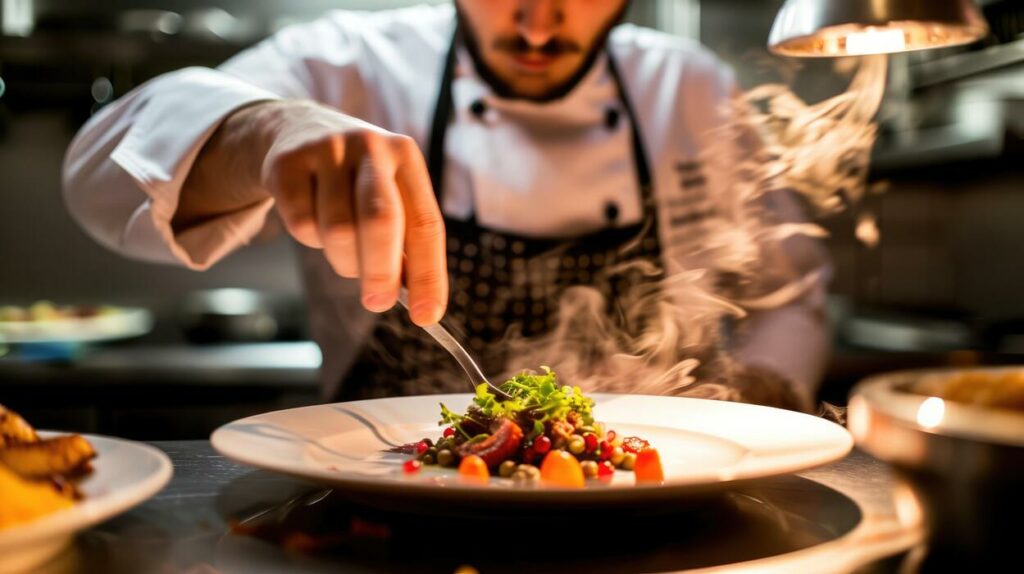
In most venues, the leak isn’t effort — it’s missing controls. Food cost doesn’t blow out overnight. It drifts — quietly, predictably — and almost always for the same reasons. Not because the chef isn’t talented. Not because suppliers are “too expensive.” But because the kitchen is running without enough controls.
When portions change plate by plate, when recipes live in someone’s head, when stocktake happens monthly, when waste isn’t tracked, and when items leave the kitchen without being rung up… you don’t have a food‑cost problem. You have a visibility problem. And invisible costs always win.
Portion Drift — The Silent Margin Killer
One extra scoop. One oversized protein. One “chef’s mood” plate. That’s 1–3% gone instantly — and you don’t feel it until the month is finished. Profitable kitchens portion with intention, not instinct. Pre‑weighed portions for high‑cost items (chicken, meat, fish) using portion containers or labelled prep bags eliminate drift and protect margin plate by plate.
Recipe Controls — If It’s Not Costed, It’s a Guess
A recipe is a costed margin, not a suggestion. If the team isn’t cooking to a locked recipe, you don’t have a consistent food cost — you have a guess. Cost it. Lock it. Follow it. Every variation becomes a permanent leak.
Weekly Stocktake — Monthly Is Too Slow
Monthly stocktake tells you what went wrong. Weekly stocktake tells you before it goes wrong — exposing over‑ordering, poor rotation, prep mistakes, theft, and drift before the month is blown. But weekly stocktake only works when the method is disciplined.
Invoices must be entered before counting, the same stocktake sheet must be used every time, and the storeroom must be organised so the count flows the same way each week (shelf‑by‑shelf, left‑to‑right). With FIFO in place, you don’t just count more accurately — you reduce waste, protect quality, and eliminate “mystery variance.”

Purchasing Discipline — Where Most Kitchens Lose Control
Even with perfect portions and recipes, food cost drifts when purchasing isn’t controlled. Prices change, specs (product specification) change, and invoices creep up quietly — and most owners only notice at month‑end. Par levels, an ordering rhythm, and a weekly invoice variance check catch price and spec creep early.
Just as important: protect supplier discipline. Approved suppliers with agreed specs keep quality consistent and costs predictable. Last‑minute supermarket runs don’t just raise price — they disturb yield, consistency, and guest experience at the same time.

Waste Visibility — Profitable Kitchens Measure It
Every kitchen has waste. Only profitable kitchens track it. A simple waste log reveals patterns — over‑production, spoilage, prep issues, and habits that quietly drain margin. Every piece of waste is paid for by someone. If you don’t know where it went, how it happened, or why it happened, then you’re paying for something you never sold — and the customer certainly isn’t. You can’t fix what you can’t see.
The Most Overlooked Control: Everything Must Be Rung Up
This is where profit disappears quietly. Every item leaving the kitchen must be rung up — even if it’s free — and allocated correctly (owner, staff meals, manager meals, marketing/complimentary, waste). If it’s not rung up, it becomes invisible — and invisible food destroys margin. The rule is simple: no food or drink leaves the pass without a slip. Not for staff, not for friends, not for family. This single discipline can recover 2–4% on its own.
Menu Mix — Why Food Cost Stays High Even with Perfect Controls
If your best‑selling items are low‑contribution, your overall food cost stays high — even if the kitchen is disciplined. That’s why the floor team becomes part of food‑cost control.
This isn’t pushy upselling. It’s smart pairing: guiding customers toward profit‑positive items, pairing high‑margin items with popular high‑cost ones, and running a 90‑second pre‑shift “profit focus” so every shift has a clear target. The principle is simple but often overlooked: sell the steak, but pair it with a low‑food‑cost side. That’s the secret behind a profitable menu mix.
The Ponsonby Turnaround: 39% → 31%
A Ponsonby restaurant was running at 39% food cost. Strong sales. Great product. But margins were leaking everywhere. I installed seven controls: standardised portions, locked costed recipes, weekly stocktake, a simple waste log, mandatory ringing‑up with allocation, par levels with an ordering rhythm, and weekly invoice variance checks to catch price and spec creep.
Food cost dropped to 31% within weeks — without changing suppliers or raising prices.
What That Means in Real Money
At $100,000 monthly turnover, an 8% improvement puts $8,000 back into the owner’s pocket — every month. No new menu. No new supplier. No extra sales. Just controls.
The Real Lesson
Food cost doesn’t improve with motivation or “trying harder.” It improves with controls, discipline, and visibility. Most kitchens don’t need a new supplier — they need a system.
If you’re in Auckland and your food cost is drifting above 33–35%, it’s usually fixable fast with the right controls. This month I’m doing walk-ins across New Lynn, Ponsonby, Mission Bay, and Parnell — if you see me with a coffee and a notebook, say hello. Or book a 90-minute Profit Snapshot here: https://ismaildavids.co.nz/book-appointment/

Ismail Davids — Profit Master™ – in**@**********ds.com – +642102869636 – ismaildavids.co.nz
No comments, yet.
Be the first to comment. Start the conversation